Federal Government Targets Veterans’ Bargaining and Seniority Rights
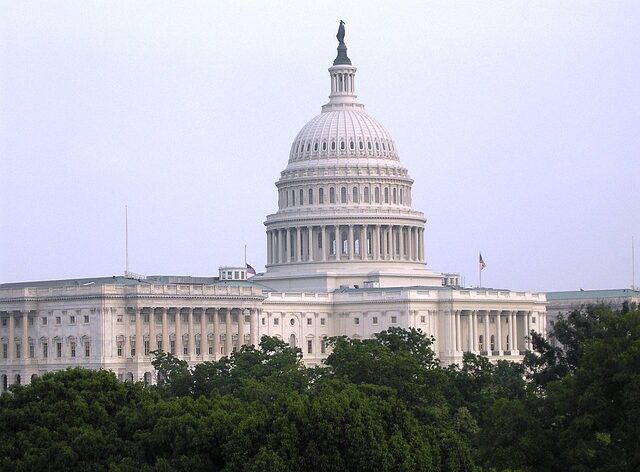
The federal government is attempting to implement policy changes and reorganizations that could contribute to job losses for veterans in the civil service and at the Department of Veterans Affairs. One is a proposed overhaul of federal layoff procedures, and the termination of union contracts at major agencies has raised protests from veteran advocacy groups and veterans alike.
The other is a move by the Secretary of Defense, which Government Executive reports on in an April 16, 2026, post. “In an April 9 memo obtained by Government Executive, Hegseth gave his deputies 24 hours to take action to cancel their union contracts, with some exceptions.”
>> Never miss benefits news and updates that are important to you. Sign up today to receive the MyMilitaryBenefits newsletter free to your inbox.
OPM Moves to Terminate Veteran Seniority Protections in Civil Service Jobs
The Office of Personnel Management (OPM) is advancing a proposed rule that modifies the criteria for federal layoffs, including veterans. At press time, that rule is in the public comment phase and has not been officially adopted. That public comment period was scheduled to end in early May 2026.
Traditionally, federal law has required agencies to prioritize seniority and veteran status in conducting a reduction-in-force (RIF). The new proposal changes the criteria to use performance ratings instead.
Under this system, a non-veteran with a higher performance score could be retained over a veteran with more years of service. Traditional veteran preference in retention would be removed under the new policy.
Because veterans make up nearly one-third of the federal workforce, these reductions and the loss of union protections affect them disproportionately. Veteran service organizations, including the Disabled American Veterans (DAV) and the Veterans of Foreign Wars (VFW), have gone on the record opposing the OPM policy change, arguing the shift to performance-based layoffs violates the Veterans’ Preference Act of 1944.
Their complaint includes the notion that performance reviews are subjective and could be used as workarounds to the protections granted to those who served in the military. Union leaders have also filed lawsuits to block the proposed changes, alleging that the administration is targeting specific groups for political reasons.
At press time, there seems to be a concerted effort within the federal government to end collective bargaining in the Defense Department and the Department of Veterans Affairs.
Defense Secretary Moves to Terminate Collective Bargaining
The Department of Defense (DOD) has moved to terminate collective bargaining agreements with the American Federation of Government Employees (AFGE). A memo issued by the Defense Secretary on April 20, 2026, orders an end to these contracts.
AFGE, a union representing 300,000 employees at the Department of Defense (DOD), published a strong response after Defense Secretary Pete Hegseth “appears to have issued a memo directing agencies and components to terminate all collective bargaining agreements between the DOD and AFGE,” according to the AFGE official site.
Furthermore, “This action comes a year after President Trump signed Executive Order (EO) 14251, which illegally stripped over one million federal employees of their union rights, citing national security reasons.”
“Secretary Hegseth’s decision to terminate the union rights of hardworking individuals who support our military is a cowardly continuation of this administration’s unlawful attack on federal employees’ First Amendment right to belong to a union,” said AFGE National President Everett Kelley in a press statement. This is a developing story.
>> Never miss benefits news and updates that are important to you. Sign up today to receive the MyMilitaryBenefits newsletter free to your inbox.
About the author
Editor-in-Chief Joe Wallace is a 13-year veteran of the United States Air Force and a former reporter/editor for Air Force Television News and the Pentagon Channel. His freelance work includes contract work for Motorola, VALoans.com, and Credit Karma. He is co-founder of Dim Art House in Springfield, Illinois, and spends his non-writing time as an abstract painter, independent publisher, and occasional filmmaker.