2026 NDAA Signed Into Law
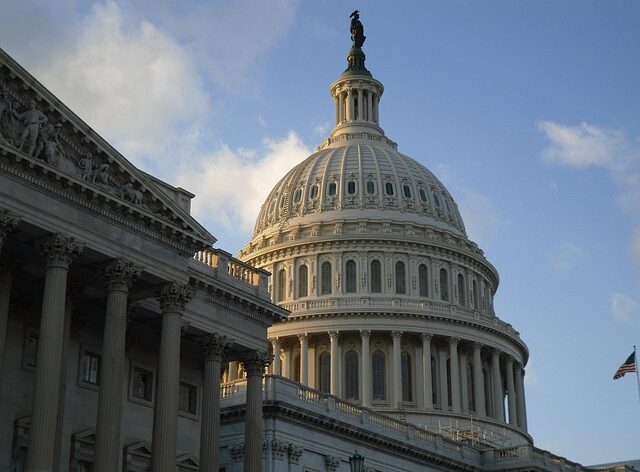
On December 18, 2025, the White House official site announced the signing of the 2026 National Defense Authorization Act (NDAA) into law.
What Is the NDAA?
The NDAA is the federal law codifying the budget, expenditures, and policies of the United States Department of Defense. Passed annually, the NDAA provides federal funding for military personnel, weapons procurement, and defense research while establishing the strategic framework for national security operations.
The United States Senate passed the 2026 National Defense Authorization Act on December 17, 2025. The NDAA includes $900.6 billion for national defense and military operations.
2026 NDAA Signed Into Law
The 2026 National Defense Authorization Act authorizes a 3.8% pay raise for all service members. It also mandates a review of the Basic Allowance for Housing to ensure rates reflect actual market costs. This new methodology focuses on the number of bedrooms and local rental prices.
The NDAA authorizes $206 million for Department of Defense schools and $50 million in Impact Aid for local school districts. Other features of the 2026 NDAA include, but may not be limited to the following:
- The 2026 NDAA authorizes $220.3 billion in disability compensation payments to more than 7 million veterans and their survivors.
- $52.7 billion for the Toxic Exposures Fund to support veterans affected by environmental hazards during their service.
- $16.2 billion for readjustment benefits, including education and job-training assistance for over 1.1 million trainees.
- $4.1 billion to the Veterans Benefits Administration for the processing of claims and the management of veteran programs.
- $3.1 billion for pension benefit payments to more than 200,000 veterans and their survivors.
- $1.3 billion for the construction and modernization of enlisted barracks across all military branches.
- $945 million for medical and prosthetic research, including studies on traumatic brain injury.
- $491 million for the construction of new military childcare centers.
Veteran Programs in the NDAA
The bill expands the Individual Longitudinal Exposure Record, intended to improve medical data sharing between the military and the Department of Veterans Affairs.
This system tracks environmental hazards and toxic exposures during service.
The act also directs military medical treatment facilities to share resources with the Department of Veterans Affairs. This measure aims to increase the volume of veterans treated at military hospitals. It enables cross-credentialing of medical providers to ensure veterans receive timely care. Additionally, the legislation lowers the travel distance for specialty care reimbursement from 100 miles to 75 miles.
Controversial Policy Measures
The final text of the 2026 NDAA removes a provision that required TRICARE to cover in vitro fertilization for all service members. The law now limits this coverage to members who sustain injuries or illnesses on active duty. This change followed intense debate over reproductive healthcare access.
The act codifies executive orders that eliminate diversity, equity, and inclusion programs in the military, and the NDAA prohibits reducing troop levels in South Korea and Europe without a formal certification from the Secretary of Defense.
The 2026 NDAA includes changes to the defense acquisition process to speed up technology delivery. The bill also funds the so-called “Golden Dome for America” missile defense shield and increases production of submarines and fighter aircraft.
RELATED:
About the author
Editor-in-Chief Joe Wallace is a 13-year veteran of the United States Air Force and a former reporter/editor for Air Force Television News and the Pentagon Channel. His freelance work includes contract work for Motorola, VALoans.com, and Credit Karma. He is co-founder of Dim Art House in Springfield, Illinois, and spends his non-writing time as an abstract painter, independent publisher, and occasional filmmaker.