The Medal of Honor
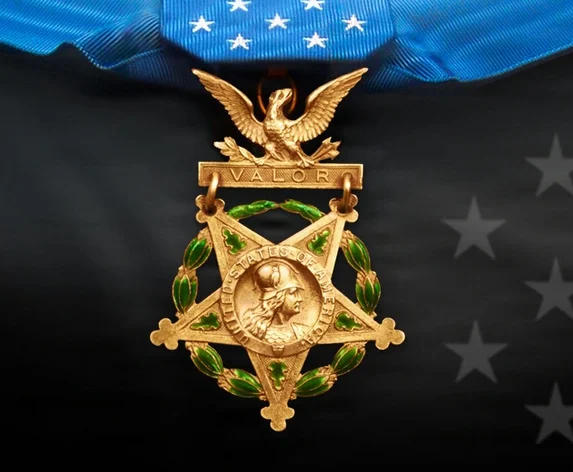
The Medal of Honor is the highest military decoration awarded by the Department of Defense. The President presents it in the name of Congress to members of the armed forces who distinguish themselves through acts that came at the risk of life above and beyond the call of duty. The Medal of Honor is reserved for acts of valor that occur during combat against an enemy of the United States.
Because the Medal of Honor is awarded for valor in combat, there will be nominations for this award over time for the most recent military conflicts, including operations commonly referred to as the Iran War. At press time, no MoH nominations for Iran War service have been announced, but it’s only a matter of time.
Understanding the Medal of Honor
Before the Civil War, the United States did not have a standard system for recognizing acts of heroism and sacrifice in the line of duty. President Abraham Lincoln signed Public Resolution 82 on December 21, 1861, authorizing the production of the medals for Navy enlisted troops; in 1862, similar legislation was passed for the Army. President Lincoln signed the Army resolution on July 12, 1862.
During the Civil War, the criteria for the award were less stringent than they are today, and some medals were issued for actions that would now be recognized with lower-level awards. For example, hundreds of members of the 27th Maine Volunteer Infantry received the medal for agreeing to extend their enlistment during a period of crisis.
Qualification Standards
The act of valor must occur:
- While the veteran engaged in action against an enemy of the United States.
- While engaged in military operations involving conflict with an opposing foreign force.
- While serving with friendly foreign forces engaged in an armed conflict in which the United States is not a belligerent party.
- The act must distinguish the individual from their comrades and involve a risk to life.
- There must be proof of the performance of the service, typically from the testimony of at least two eyewitnesses.
The nomination process typically begins at the unit level and moves through the chain of command. It requires approval from the Secretary of Defense and the President.
A recommendation must usually be made within three years of the act, and the medal must be presented within five years. If these windows close, a member of Congress can introduce legislation to waive the time limits for a specific individual.
Find VA-approved schools near you—use our School Finder tool.
Meaning and Protocols
The Medal of Honor is the only neck-worn indoor decoration in the military. There are three versions of the medal: one for the Army, one for the Navy (used by the Marine Corps and Coast Guard), and one for the Air Force/Space Force. Each has a unique design. Recipients are often invited to attend presidential inaugurations and other state events as guests of honor.
Benefits for Awardees
Recipients receive a special monthly pension. As of 2026, this pension is adjusted annually to account for the cost of living. For a service member who retires from the military, their retired pay is increased by 10 percent if they have been awarded the Medal of Honor.
Education and Travel
The children of Medal of Honor recipients are eligible for admission to the United States military academies without a congressional nomination. They must still meet the physical and academic requirements for entry.
Recipients are granted use of military air transportation. This is known as Space-Available travel. It allows recipients to travel on military aircraft within the United States and overseas when seats are available. This benefit extends to their dependents in certain circumstances.
Medical and Base Privileges
Recipients and their families have access to military commissaries and exchange stores. They also receive priority for health care services through the Department of Veterans Affairs. These individuals are exempt from the standard co-payments required for many veteran medical services.
Uniform and Burial Rights
A recipient may wear the military uniform at their discretion for ceremonial occasions, and is provided with a supplemental uniform allowance to maintain it. Recipients are eligible for burial at Arlington National Cemetery. They receive full military honors at their funeral, and their headstones are inscribed with the Medal of Honor insignia.
>> Find VA-approved schools near you — use our School Finder tool.
About the author
Editor-in-Chief Joe Wallace is a 13-year veteran of the United States Air Force and a former reporter/editor for Air Force Television News and the Pentagon Channel. His freelance work includes contract work for Motorola, VALoans.com, and Credit Karma. He is co-founder of Dim Art House in Springfield, Illinois, and spends his non-writing time as an abstract painter, independent publisher, and occasional filmmaker.