How to Read a Military Pay Chart
There are various types of military pay, but the most important is Basic Pay. It’s the main component of an individual’s salary. Special and incentive pay are also factors, and there are special pay options for linguists, pilots, and those with other highly specialized skills. There are also military allowances, which cover expenses such as housing costs and food.
This article is concerned with is Basic Pay (not allowances or special pay) and how you can read a military pay chart to learn what your basic pay is currently.
Reading Military Pay Charts
Basic pay is a service member’s main income. Two factors determine your spot on the basic pay scale: your years of service and your rank.
Basic pay rates are calculated monthly, but paid bimonthly. When you receive payment, it is based on your time in grade and time in service. Milpay charts show this information, but they can be tricky to read and understand at first.
Read more: 2026 Military Pay Charts with the Proposed 3.8% Military Pay Raise
Military Pay Calculator
Basic Pay
$2,319
Stay up-to-date on all the latest military pay info personalized just for you.
How to Understand a Military Pay Chart
The key to understanding a military pay chart is to know that your total time in uniform, combined with your total time in your current rank, is the determining factor. To read a military pay chart, simply find the place on the chart showing the total number of years you have served to date, and add up the total time you have spent in your current rank.
Locate your specific time in grade and time in service on the military pay chart and you’ll see how much you are currently entitled to earn as a military member with X number of years of service.
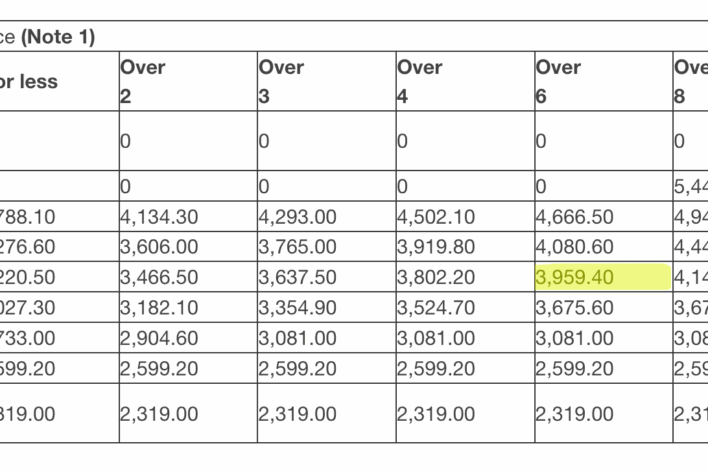
Cross-reference time in service with the number of years you have spent in your current pay grade to learn how much you qualify for in Basic Pay at your current rank.
An E5 with over 6 years of military service would find their military pay as highlighted in the chart below:

Time In Grade Versus Time In Service
These two terms have 2 specific meanings. Time in service refers to the total amount of time spent serving in uniform. This counts toward active duty promotions, reenlistment or recommissioning, and military retirement or separation.
- Time in Service affects pay and retirement eligibility. It is the big-picture measure of a servicemember’s entire career.
- Time in Grade affects promotion eligibility. It provides a more granular view of a servicemember’s experience at their current rank.
Pay grades are the same for all branches of military service. An E1 is an E1, regardless of the uniform they wear. A military rank is more service-specific. In the Army, an E5 is a Sergeant. However, in the Air Force, an E5 is referred to as a Staff Sergeant. Same grade and pay, different title.
Time in Service Explained
Time in Service (TIS) begins on the day a servicemember takes their oath of enlistment or commissioning and represents the entirety of their military career. The longer a person serves, the higher their basic pay becomes within their specific pay grade up to a high year of tenure limitation (see below). Breaks in service are not counted, only the total time spent earning a military paycheck.
TIS is a factor for retirement eligibility, with most active-duty servicemembers becoming eligible for retirement benefits after completing 20 years of active service.
Time in Grade Explained
Time in Grade (TIG) tracks the amount of time a servicemember has held their current rank. When a soldier gets promoted to Sergeant (E-5) on January 1, 2023, their TIG as a Sergeant begins on that date.
Before a servicemember can be considered for advancement to the next rank, they must typically meet a minimum TIG requirement. There are also maximum times allowed. Did you know some military members face involuntary separation if they are not promoted from their current rank within a specified amount of time?
High Year of Tenure Issues
High Year of Tenure (HYT) is the term describing the maximum number of years enlisted members may serve at a given rank without achieving promotion, after which they must separate or retire. U.S. military officers are not subject to HYT but have limitations on how long they may serve in a given rank.
That is why you see pay flattening out for many military grades after a set amount of time. The Air Force, for example, won’t give an E4 a pay raise after six years of service because the Air Force expects these people to get promoted to the next grade after a “reasonable time” as an E4.
The lack of pay increases is intended to incentivize troops to pursue military promotions rather than stagnating at their current rank after spending too much time in a given military pay grade.
And that’s why some online military pay calculators created by non-military third parties fall short, offering pay information for junior enlisted grades for 10 years or more of service.
That number is misleading because the military would likely not allow a junior enlisted member (E1 through E4) to serve more than 10 years without a promotion.
Active Duty pay is reported on an active duty servicemember’s leave and earnings statement, also known as an LES, which is accessible through MyPay. The most recent three months are accessible via MyPay. For older LES copies, contact MyPay customer service at 1-888-332-7411.
The LES is a record of the service member’s leave and earnings. It displays entitlements, deductions, allotments, leave information, and much more, with the most recent LES available 24 hours a day on myPay.
Read more: Military Pay and Allowances Explained
About the author
Editor-in-Chief Joe Wallace is a 13-year veteran of the United States Air Force and a former reporter/editor for Air Force Television News and the Pentagon Channel. His freelance work includes contract work for Motorola, VALoans.com, and Credit Karma. He is co-founder of Dim Art House in Springfield, Illinois, and spends his non-writing time as an abstract painter, independent publisher, and occasional filmmaker.