Non-VA Resources for Military Transition Assistance
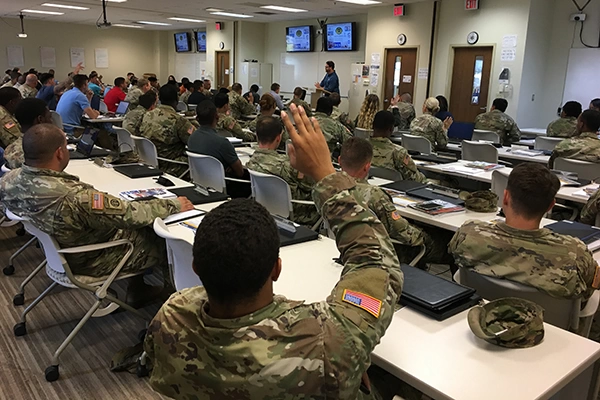
The transition out of the military into a civilian career is a complex process. It requires preparation and planning, and while the Department of Veterans Affairs is the first option some turn to for transition assistance, there is also plenty of help from non-VA resources. Some transitions are planned far in advance, such as a military retirement.
Others may require quick action with little preparation time, such as an involuntary separation from military service. No matter which option you face, there are resources that can help, and not all of them come from the Department of Veterans Affairs. Some are provided by non-VA agencies.
Military Transition Assistance from Non-VA Resources
These agencies offer programs and options that support military members and their families during the transition from military service to civilian life.
The Department of Labor, the Small Business Administration, and corporate and state programs add more opportunities for servicemembers. Using this wider network of resources is a key step toward professional success.
Department of Defense Transition Assistance
The Department of Defense (DoD) provides transition support, including the DoD Transition Assistance Program (TAP), which typically begins at least a year before the end of the service member’s final tour.
TAP provides a standard curriculum so individuals know their earned benefits and the steps required for a successful transition.
- Initial Counseling and Self-Assessment: A one-on-one session where service members define their personal and professional goals.
- Pre-Separation Counseling: A session covering benefits, resources, and the development of an Individual Transition Plan (ITP).
- DoD-Led Training: A day of instruction on managing the transition, translating military skills to civilian jobs, and financial planning.
- VA Benefits and Services Briefing: Delivered by the VA, this is a mandatory part of the DoD’s TAP curriculum that covers all VA benefits.
- Department of Labor (DOL) Employment Workshop: A one-day workshop on job-seeking skills, including resume writing and interviewing.
Service members select a specialized two-day track: DOL Employment, DOL Vocational, SBA Entrepreneurship, or an education track. Commanders are meant to verify that the service member has a workable ITP and has met all Career Readiness Standards.
The DoD SkillBridge Program
The DoD SkillBridge program is a non-VA path to a civilian job. This program allows service members to gain civilian work experience through internships or apprenticeships during their final 180 days of service. The service member continues to receive military pay and benefits while training with a civilian employer.
Participation requires approval from the unit commander and depends on the mission. It offers service members real-world training and a chance to try a career field.
It gives employers access to a skilled workforce at no initial cost. Many companies use SkillBridge as a long-term interview, and many participants get a job offer from the host company after their service ends. The program connects military personnel with hundreds of approved partners, from small businesses to large corporations.
U.S. Department of Labor (DOL)
The Department of Labor’s Veterans’ Employment and Training Service (VETS) programs are delivered through the national network of American Job Centers (AJCs).
Within these centers, veterans receive priority of service and can get help from specialized staff:
- Local Veterans’ Employment Representatives (LVERs): LVERs reach out to employers to create job opportunities for veterans.
- Disabled Veterans’ Outreach Program (DVOP) Specialists: DVOPs provide intensive, one-on-one case management services to veterans with significant barriers to employment, including disabled veterans.
The DOL also offers the Transition Employment Assistance for Military Spouses (TEAMS) program, a series of online workshops to help military spouses with career planning.
U.S. Small Business Administration (SBA)
For aspiring entrepreneurs, the SBA offers many resources. The main entry point is the Boots to Business (B2B) program, one of the two-day tracks in TAP that provides an introductory course on business ownership. For those who have already transitioned, the Boots to Business Reboot program offers the same curriculum in a community setting.
The SBA also provides ongoing support:
- Veteran-Owned Small Business (VOSB) Contracting: The federal government awards a percentage of federal contracts to veteran-owned small businesses. There is SBA help with certification that may allow small business veterans to compete for these contracts.
- Access to Capital: The SBA guarantees a portion of loans made by lenders, reducing risk and making it easier for veteran entrepreneurs to get financing.
- Resource Network: The SBA partners with Veterans Business Outreach Centers (VBOCs) that provide counseling, training, and mentorship.
- SBA also provides training and resources for disabled veterans who want to become small business owners.
The Non-Profit Sector
Many non-profit and community organizations provide career transition services.
Comprehensive Programs and Fellowships
-
- Hiring Our Heroes (HOH): A program of the U.S. Chamber of Commerce Foundation, Hiring Our Heroes helps veterans, service members, and military spouses find jobs. Its main program is the Corporate Fellowship Program, which places individuals in a 12-week fellowship with a major corporation.
- Onward to Opportunity (O2O): This is a career skills program providing free professional certifications and job placement support. It offers over 40 career tracks in fields like project management (PMP) and information technology (CompTIA).
Mentorship and Professional Networking
-
- American Corporate Partners (ACP) is a non-profit that focuses on mentorship. ACP connects post-9/11 veterans with corporate professionals for a year-long, one-on-one mentorship. The mentor helps the veteran with career exploration, networking, and resume building. The program is tailored to the veteran’s goals and provides a direct link to the corporate world.
- FourBlock: This organization prepares veterans for competitive careers through a semester-long program. FourBlock’s program brings veterans together for weekly classes hosted by a different company each week. This allows veterans to build a professional network, learn about corporate cultures, and improve their career strategy with feedback from business leaders.
Entrepreneurship Support
-
- Bunker Labs: This national non-profit helps the military community succeed as entrepreneurs. It provides a community and programs for those looking to start a business. Its programs include the Veterans in Residence incubator and the CEOcircle for leaders of more established companies. Bunker Labs has local chapters that create a network for peer support and business connections.
Industry-Specific Training
For the technology sector, organizations like BreakLine, Operation Code, and VetsinTech may help veterans find careers in tech roles like software engineering and cybersecurity. They provide training, networking, and coaching to navigate the tech industry.
Direct Corporate Engagement and State-Level Assistance
Many corporations have also created their own veteran support systems. These programs show a company’s commitment to hiring from the military. Many large companies have dedicated military recruiters and run hiring events for veterans. They often have internal employee groups that provide a community for veteran employees. These programs are often the final goal for participants in SkillBridge and HOH fellowships.
Support is also available at the state level. Nearly every state has its own Department of Veterans Affairs or a similar agency. These are state-level entities, separate from the federal VA. They often provide employment services, including state government hiring preferences for veterans and connections to local employers. They are a good resource for learning about local opportunities and benefits, and provide help for veterans returning to school.
About the author
Editor-in-Chief Joe Wallace is a 13-year veteran of the United States Air Force and a former reporter/editor for Air Force Television News and the Pentagon Channel. His freelance work includes contract work for Motorola, VALoans.com, and Credit Karma. He is co-founder of Dim Art House in Springfield, Illinois, and spends his non-writing time as an abstract painter, independent publisher, and occasional filmmaker.