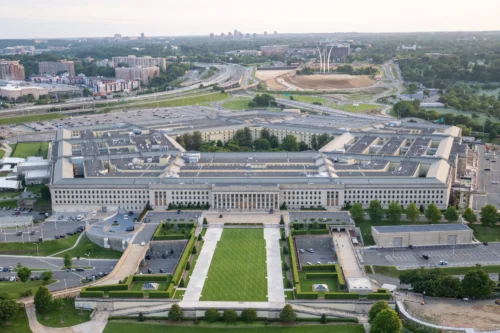
Refusing an Illegal Military Order

The United States military operates on obedience, but there’s a catch. Military orders must be lawful and comply with various regulations, including the Uniform Code of Military Justice, the Articles of War, and the Geneva Conventions. Every service member has a legal duty to disobey an unlawful order, but there is a caveat.
>> Find Out What Military Benefits You’re Missing — Sign up today to receive the MyMilitaryBenefits newsletter free to your inbox.
Refusing an Illegal Military Order
Disobeying an illegal direct order may result in charges, a court-martial, or other punitive measures until it has been legally established that those who refused the order acted appropriately. In the meantime, access to certain military pay, promotions, new assignments, benefits, and programs may be affected depending on circumstances.
Refusing to obey a direct order is not a step to be taken lightly.
Duty to Disobey Unlawful Military Orders
The duty to refuse an unlawful order is part of the oath to support the Constitution of the United States, the supreme law for all military personnel. The Uniform Code of Military Justice (UCMJ) and the Manual for Courts-Martial include sections that establish this principle.
“An order requiring the performance of a military duty or act may be inferred to be lawful, and it is disobeyed at the peril of the subordinate. This inference does not apply to a patently illegal order, such as one that directs the commission of a crime.” —Manual for Courts-Martial
Troops and families should know that UCMJ Articles 90, 91, and 92 punish failure to obey a lawful order only. This limitation defines military authority and creates the opportunity to refuse an unlawful order.
A service member who executes a patently illegal order may face criminal liability; the defense of “obedience to orders” provides no shield in such cases.
The Manual for Courts-Martial states an order is lawful unless it meets one of the following criteria:
- Contrary to the Constitution, infringing upon rights without military necessity.
- Contrary to United States laws, including federal laws and the Law of War (LOW).
- Beyond the authority of the official issuing it, it lacks a legitimate military purpose.
- Contrary to superior orders, contradicting a higher regulation or directive.
In typical cases, military orders are presumed lawful. The service member must demonstrate the order’s illegality if charged with disobedience. The illegality must be manifestly unlawful; its illegality must be clear to a person of ordinary sense.
Examples of Illegal Orders:
- Violating the Law of War. Commands to target civilians, torture detainees, or execute prisoners of war are illegal under the conventions adopted by the U.S.
- Requiring a Crime. Directives to commit crimes such as murder, assault, or theft are plainly criminal. These are not the only examples of criminal activity; they are simply some of the most obvious.
- Violating Posse Comitatus. Orders for the military to engage in domestic law enforcement roles beyond statutory allowances are generally unlawful.
>> Find Out What Military Benefits You’re Missing — Sign up today to receive the MyMilitaryBenefits newsletter free to your inbox.
Process for Refusal
When a military order is unlawful, troops must proceed with caution. The service member should first seek clarification of the order’s intent.
If the superior confirms the order, the service member must respectfully state their legal concern, citing the specific law the order violates. If the superior insists, the service member must refuse the order on the grounds of its manifest illegality.
Keep in mind that this choice presents a risk. It exposes the service member to potential charges under the Uniform Code of Military Justice. Ideally, it is wise to seek legal counsel before being placed in a position to refuse an order, but this is not always possible.
Following refusal, the service member should seek legal protection. Request a consultation with a military defense counsel or a Judge Advocate (JAG) officer. Legal advice prepares the defense against anticipated UCMJ charges, where the defense depends on proving the order was illegal.
The service member has formal avenues to report the unlawful command. They can file a complaint with the Inspector General (IG) system within their service or the Department of Defense, which investigates violations of law.
A service member may also “petition for redress” under Article 138, UCMJ, a formal process that compels an immediate superior commander to investigate and take action. This is a form of relief often used in cases of retaliation or anti-whistleblowing activity within the ranks.
>> Find Out What Military Benefits You’re Missing — Sign up today to receive the MyMilitaryBenefits newsletter free to your inbox.
About the author
Editor-in-Chief Joe Wallace is a 13-year veteran of the United States Air Force and a former reporter/editor for Air Force Television News and the Pentagon Channel. His freelance work includes contract work for Motorola, VALoans.com, and Credit Karma. He is co-founder of Dim Art House in Springfield, Illinois, and spends his non-writing time as an abstract painter, independent publisher, and occasional filmmaker.